
Budget Season in Springfield: Why DSP Wages and At Home Day Services Matter Right Now
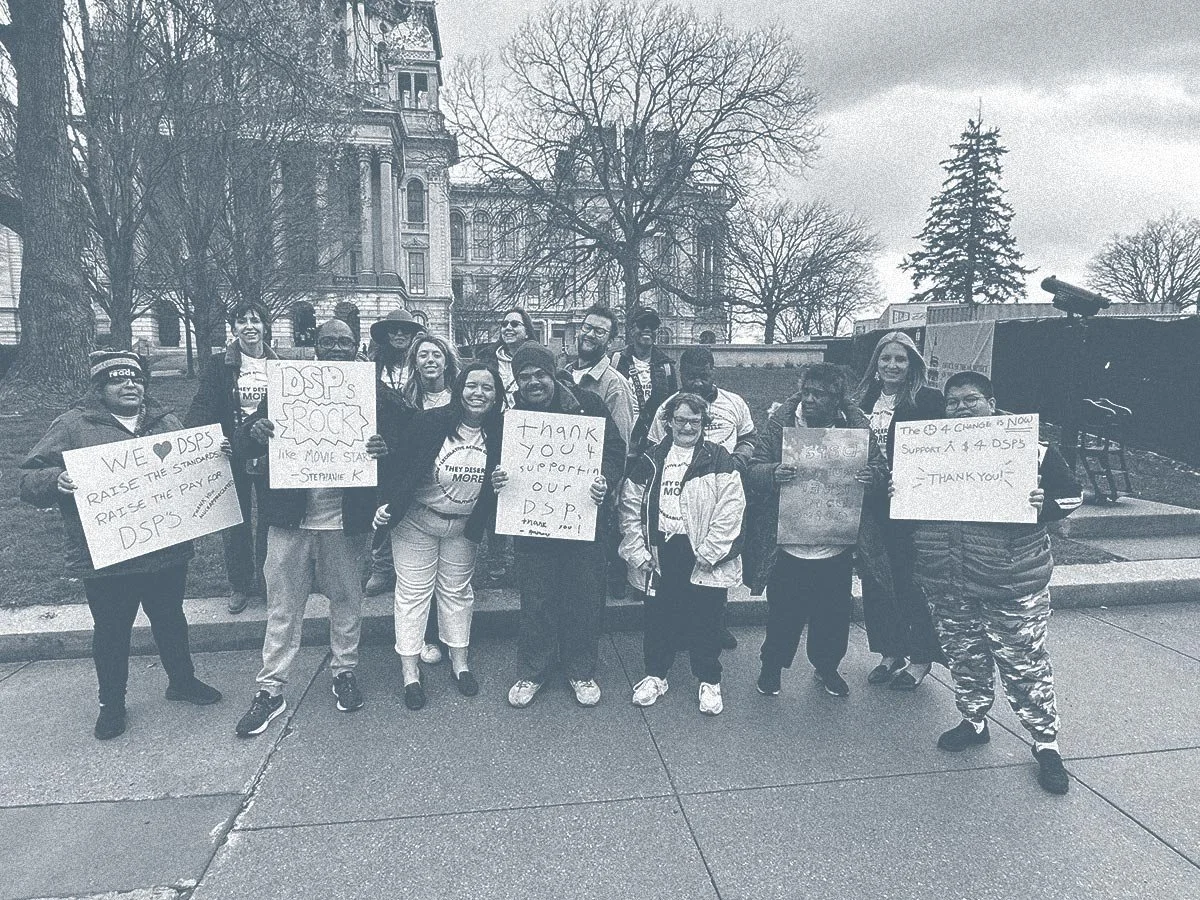
Each spring, leaders in Springfield make thousands of decisions that quietly shape everyday life across Illinois. Budget season can feel distant, but for people with intellectual and developmental disabilities (I/DD) and the Direct Support Professionals (DSPs) who support them, it shows up in very real ways at home and at work.
This year’s budget conversation comes at a challenging moment. Illinois continues to navigate broader fiscal pressure and uncertainty at the federal level. Even so, the FY2027 budget proposal builds on years of meaningful progress in community-based disability services. That continued commitment matters and it is worth recognizing.
As the General Assembly moves toward the end of session, a few decisions will have an outsized impact on the stability of the disability workforce and the flexibility people rely on in their daily lives.
Supporting the DSP Workforce
Direct Support Professionals are the backbone of community-based disability services. They support people in their homes, help build skills, ensure safety, and make community life possible. Over the past several years, Illinois has taken important steps to strengthen DSP wages, reflecting the value of this work.
The Governor’s FY2027 budget includes a proposed $0.60 per hour DSP wage increase. This is progress and it moves the system in the right direction. The remaining challenge is that DSP wages still lag what is needed to compete in today’s labor market.
In 2020, the state commissioned the Guidehouse Rate Study to define what it truly costs to support people with I/DD in a stable and sustainable way. Its top recommendation was clear: DSP wages should reach at least 150 percent of minimum wage statewide.
Today, DSP wages are funded at about 142 percent of minimum wage. A total increase of $1.20 per hour would fully achieve the Guidehouse benchmark. The administration has proposed reaching that goal over two fiscal years, with flexibility for providers to apply the increase in a way that best supports recruitment and retention.
Reaching the full benchmark is not about numbers on a chart. It is about consistency, trust, and continuity for people who rely on long-term relationships with their support staff.
Preserving At Home Day Services (37U)
Another important issue this session is the future of At Home Day Services, known as 37U.
37U provides structured daytime programming in a person’s home for those who may not attend a community day program due to health needs, aging, or personal choice. Since the pandemic, it has become an essential option for many people and families and is a core part of how support is delivered across the state.
As Illinois transitions toward a 24-hour residential staffing model, meaning homes are funded for support around the clock, there is concern that 37U could be viewed as unnecessary. While the FY2027 proposal continues to fund 37U, it remains under active review.
The question at hand is not whether people will have staff present. It is whether the higher rate that supports meaningful daytime activities will remain in place. Protecting 37U ensures people retain real choices and providers can continue offering quality, individualized support during the day.
A Thoughtful Path Forward
Illinois has made real progress in strengthening community-based disability services, even in a complex fiscal environment. This moment calls for care and collaboration so that new investments reinforce stability rather than unintentionally weakening it.
As lawmakers finalize the FY2027 budget, we encourage continued focus on two priorities:
Fully stabilizing DSP wages by reaching the Guidehouse benchmark
Ensuring At Home Day Services remain available and funded for those who rely on them
These choices will help preserve momentum and support a system that works for people, families, and the workforce alike.
Join the Conversation
Budget decisions are strongest when they reflect lived experience. If you support someone with I/DD, work as a DSP, or are connected to disability services through your work or advocacy, your perspective matters.
Consider sharing what a stable workforce or access to At Home Day Services means in real life. And if you are following the budget process, staying engaged and informed is one simple way to support thoughtful solutions this spring.
Optional way to stay engaged
For those who want to stay engaged this spring, They Deserve More offers an easy way to share your perspective with state legislators through its Take Action tool. It allows you to send a brief message about DSP wages and At Home Day Services to your elected officials if you choose.
The Illinois legislative session is scheduled to conclude at the end of May, making the coming weeks an important window for thoughtful input.
Learn more or take action here: Take Action — They Deserve More
Keystone Alliance is an ecosystem of nonprofit organizations, services, and initiatives, working together and with the field as a collaborative force to help nonprofits strengthen and sustain their missions.
We support our family of organizations and the larger nonprofit community through Keystone Shared Services, our shared back office platform, and Mission + Strategy, our strategic consulting division.
Let’s talk to see how we can help create capacity, sustainability, and collaboration for your organization.
Other Articles You Might Like